
On Clouds and Microbes
A brief history of "aerobacter aerogenes" (a lesser-known precipitation nucleus) from conversations with Walter Jehne at my kitchen table.

I have a long list of topics that I plan to write about, but when I checked in this morning during my experiment in two-way prayer, a single word came back to me: CLOUDS.
Clouds? It seemed a bit frivolous—like getting a hallmark card from my muse when I was expecting a luscious love letter—until I started to think about it. Of course. Clouds.
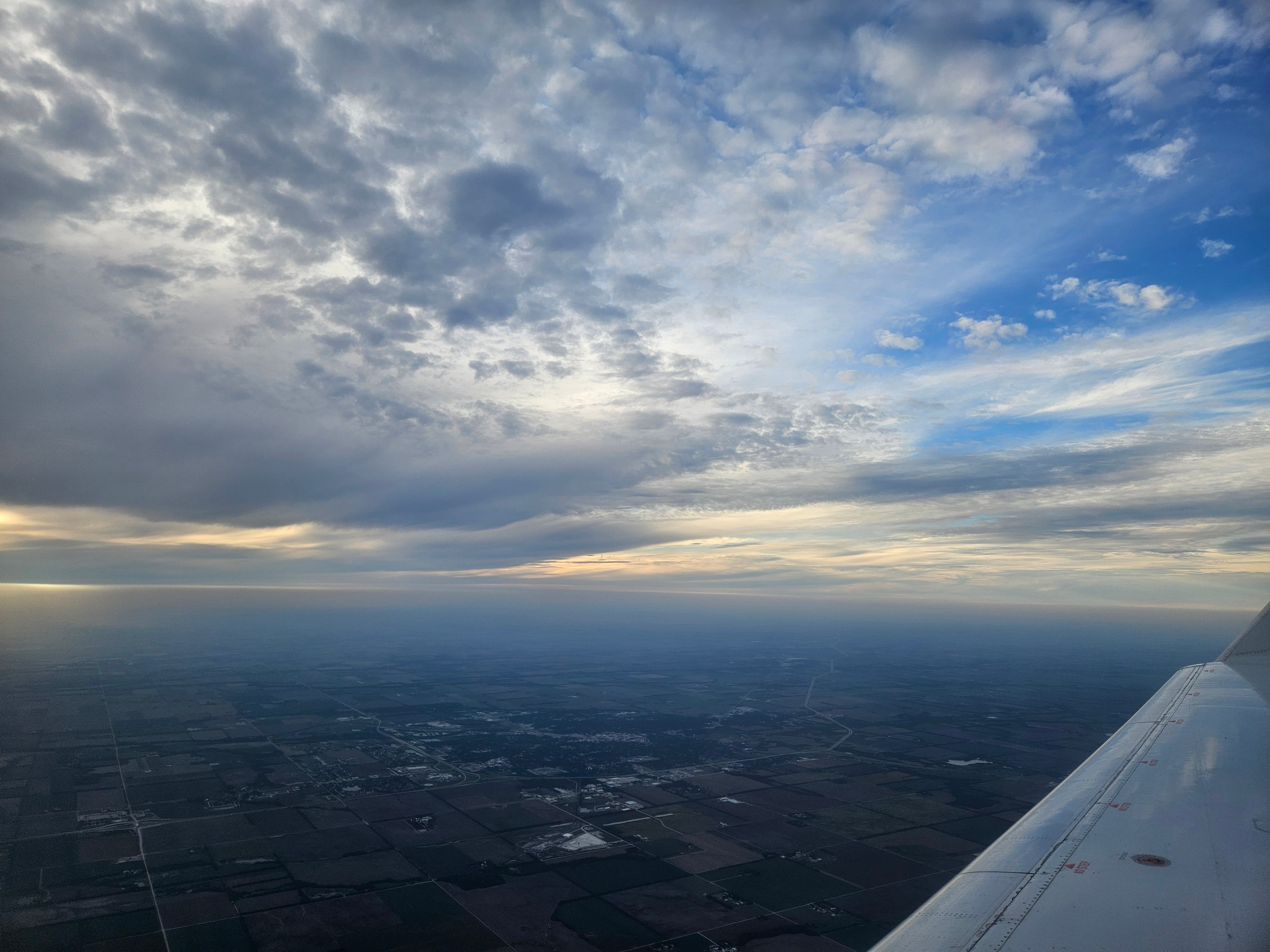
“I wish people were aware of this invisible world that is working like mad behind the scenes. Plants, microbes, water, air — it’s all one system working in synergy.” —Lisa Y. Stein, climate change microbiologist at the University of Alberta. (Quanta Magazine.)
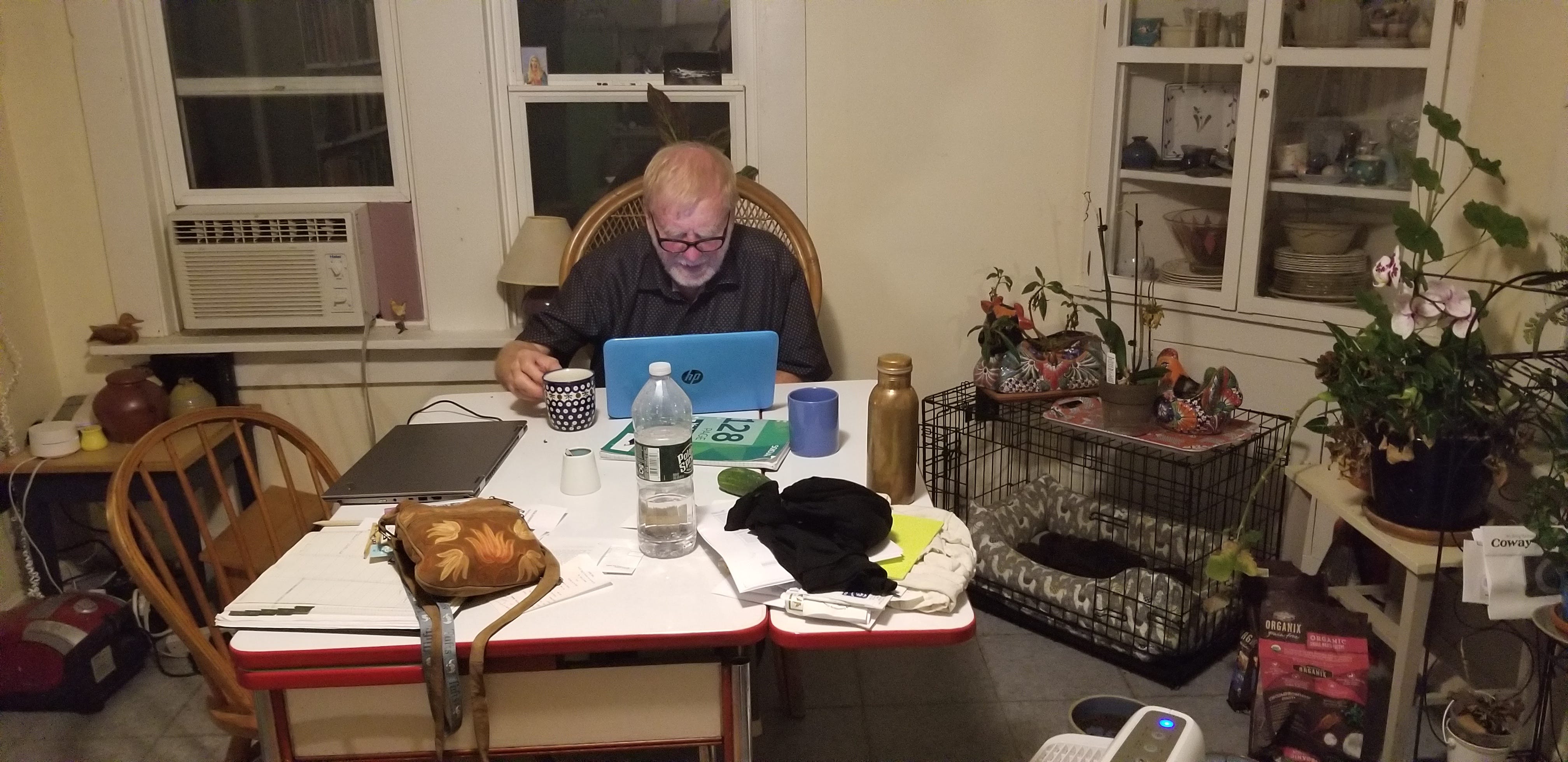
Somewhere in my piles of video cassettes is a recording of my dear friend Walter Jehne sitting at my kitchen table, his face almost eclipsed behind a large pot, telling me his personal and collective story of clouds, in great detail. That was before the pandemic, when we spent several weeks teaching and travelling together every year, and hosting an annual retreat. I’ve tried to coax him into telling it again in a more public setting, but for now, I’m going to have to tell you the short version from my memory, (though as is often the case, researching it has uncovered some interesting new details.)
When Walter was a young research scientist at CSIRO—the Australian government’s national science labs—he was assigned to a cloud-seeding research project, in which they created conditions for two processes: first condensing water vapor into suspended droplets or ice inside a chamber, and then testing various precipitation nuclei that could condense droplets large enough to fall as rain or sleet or snow.
Early in the project, pilots also flew up into the clouds, and took air samples. But there was a problem: every sample seemed to come back contaminated. They tried different containers, and different methods, but the problem persisted. Finally they realized it wasn’t the methods or the containers, the clouds themselves were full of bacteria, and in particular abundance was one type, which were originally named aerobacter aerogenes.
Who knew? Well, Louis Pasteur knew—for one—that the air in his laboratory was full of something alive and dynamic, that could turn juice into wine or vinegar, and milk into a toxic poison (that killed several of his own children) or into a delicious French cheese. He called these airborne beings “germs.”
Clearly microbes have work to do in our kitchens and our ecosystem, but what were they doing up in the clouds?
Some clever scientist at the lab where Walter worked had the idea of putting the bacteria that the pilots had collected into the experimental chamber in the laboratory. What happened stunned them. The bacteria were far more successful at producing precipitation than anything else they had tried.
On further study, the CSIRO scientists realized that these aerobacter aerogenes bacteria live as endophytes in the tissue of plants, and were found in abundance in the stomata of the leaves of forest trees, from where, presumably, they rise skyward along with the transpired water vapor exiting the stomata. (In researching this article I’ve learned “aerogenes” means gas producing. Which makes me think that perhaps their stunning ability as precipitation nuclei, as well as their ability to rise up in the air, are related in some way to the fact that these particular microbial workers are outstanding producers of hydrogen gas—which is about 14 times lighter than air, and of course, when combined with oxygen, produces H2O, or water. )
In 1960 they were renamed enterobacter aerogenes. In 2016 they were reclassified as klebsiella aerogenes in the enterobacteriacea family—the family that includes e-coli—and they are found not just up in the clouds, in soils, and in plants, but (like their e-coli brethren) also in the human gut.
Walter was delighted by this reclassification. “The question,” said Walter, “is not just how did they get up in the clouds, but how did they get into the human gut?” He let me think for a minute, on my side of the large pot… “Those were our ancestors up there in those trees, the apes, eating leaves…that were covered with aerobacter.”
Walter’s laboratory was not alone in looking at bio-precipitation, though most other scientists in the field have been focused specifically on ice-formation by another bacterium called pseudomonas syringae—in clouds, snow, crops, and insects, and even in snow machines at ski resorts. Cindy Morris and David Sands are often cited in popular articles, but they are just two of hundreds of scientists studying bio-precipitation, and bio-nucleation of ice.
If you want to dig in deeper, this paper (and this part 2) by Vali and Schell tracks much of the history of pseudomonas research. Here on Substack,
and have been writing quite a bit on the science of clouds and bioprecipitation recently, and there is a new book by my bedside called Air-Borne, the Hidden History of the Life We Breathe, that is very promising, though I’ve only just dipped into it. My book The Ecology of Care: Medicine, Agriculture, Money, and the Quiet Power of Human and Microbial Communities digs deeper into microbial work in our bodies and ecosystems.Why don’t we hear more about klebsiella aerogenes, or have papers on this from CSIRO or from Walter? The answers point straight back to two of our most challenging issues: The cloud seeding experiments at CSIRO were top-secret military research, and recent fires in Australia tragically took out a building on Walter’s farm that housed much of his written work.
We now know that the biological workforce of microbes is everywhere, doing pretty much everything. They are in the “deep, hot, biosphere” miles down under the surface of the Earth, under the ocean floor, and inside volcanoes and glaciers. They are working away in our noses and genitalia. Addictively fermenting our chocolate, coffee, tea, and beer.1 Protecting our infants while they are in utero, in the birth canal, and suckling at the breast. Creating our neurotransmitters and turning on brain development. And there they are, way up in the heavens, creating clouds, rain, sleet and snow.
Speaking of addictive fermentation of chocolate…coming soon: a mini workshop with the brilliant Sarah Bharath, from Trinidad, on regenerative cacao production.
Beautiful. Thank you again, Didi.